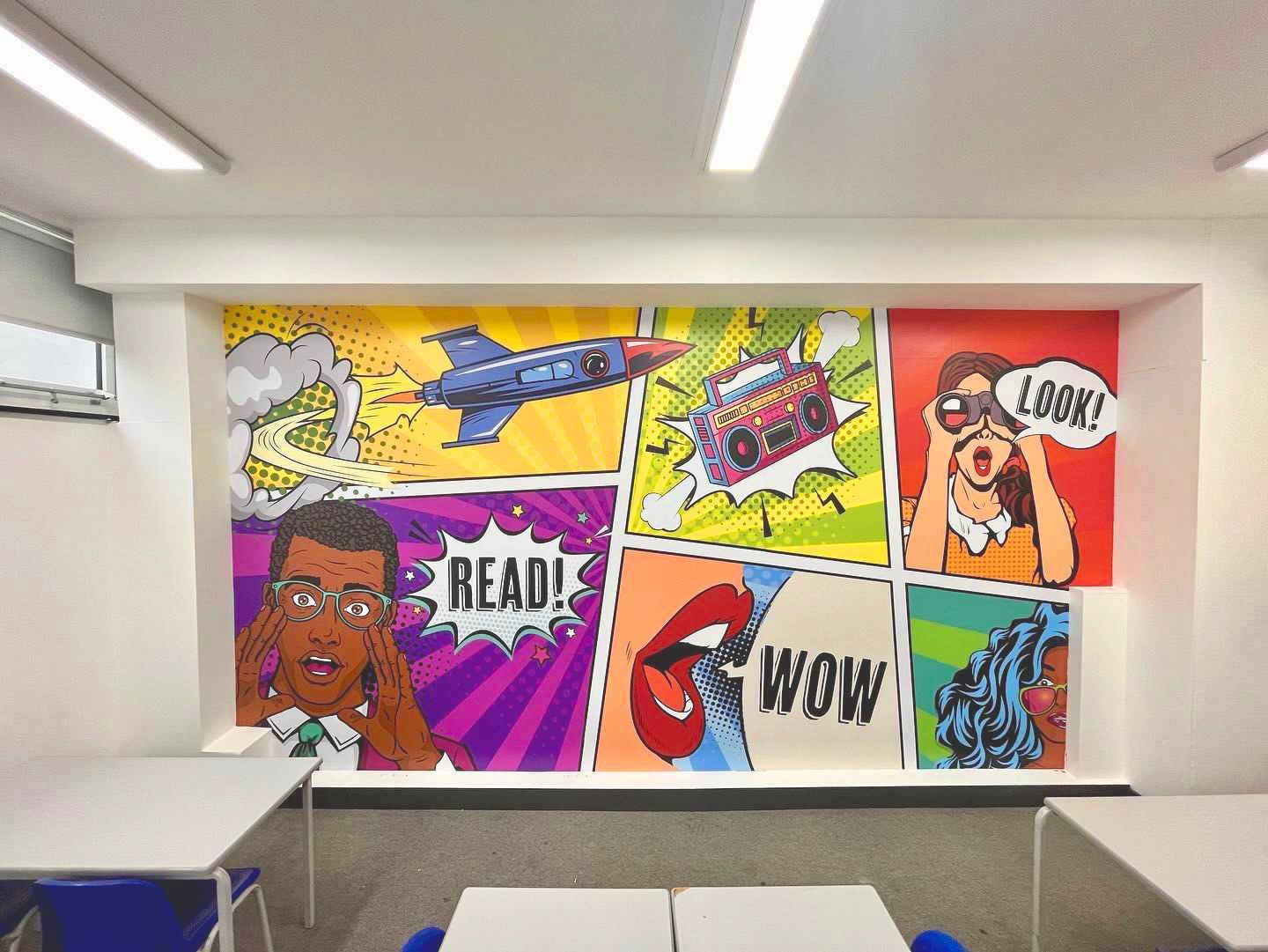
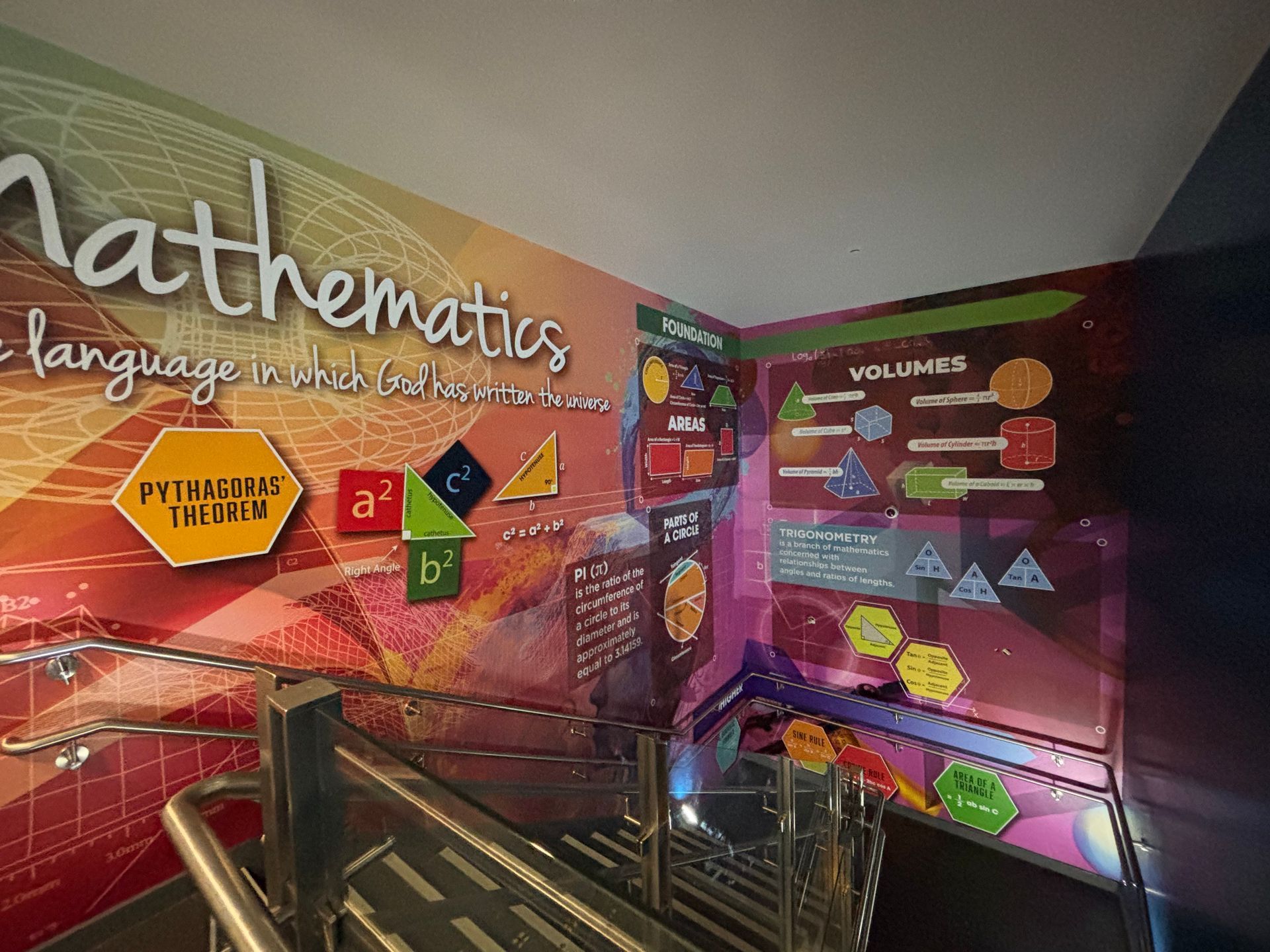
Wall graphics can encourage teamwork and foster a sense of community among individuals working together on projects or engaging in discussions. They can also serve as the background for student presentations or projects and contribute significantly to the overall shared learning journey.

Promoting teamwork and creating a sense of belonging through wall art:
Wall graphics can create points for group work or conversations that help build a sense of individual unity in a shared space. They can also act as aids for student talks or assignments. Play a vital role in the overall learning journey collectively.
Here's a guide on creating and using wall graphics to encourage teamwork and unity:
Essential Components of Collaboration and Building a Community
Engaging and Cooperative Environments;
- Wall sections can incorporate surfaces you can write on and wipe off to solve problems during brainstorming sessions and group activities.
- Utilise boards in the classroom to encourage collaboration and teamwork among students by allowing them to affix and rearrange project elements as needed.
Thematic and Educational Material;
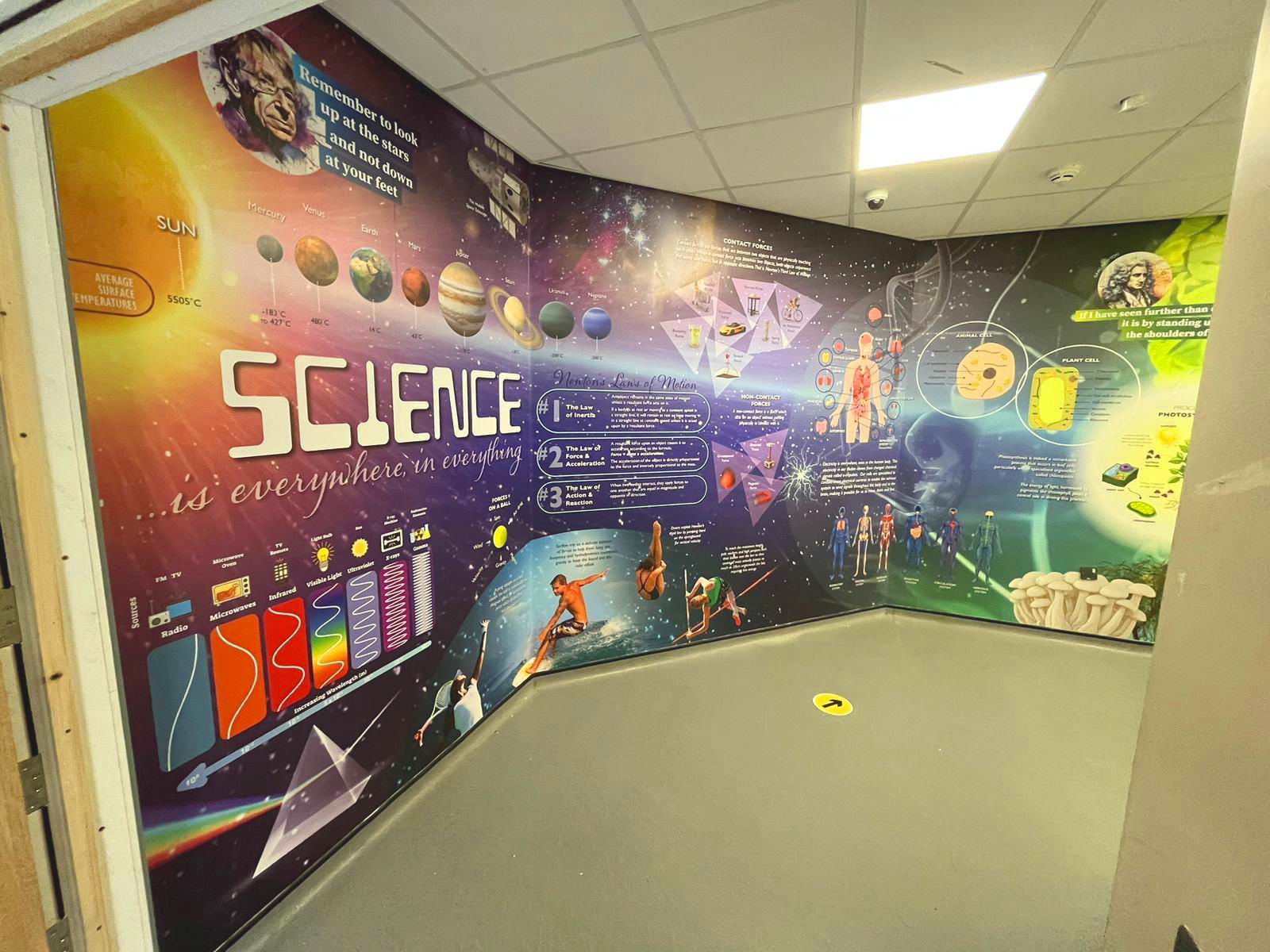
- Let's create graphics tailored to different topics, fostering an interactive learning setting that promotes collaborative discussions and group projects.
- Interdisciplinary Links: Fuse components from fields to encourage collaboration across disciplines by incorporating STEAM (Science, Technology, Engineering, Arts, Mathematics) themes.
Storytelling and presenting projects;
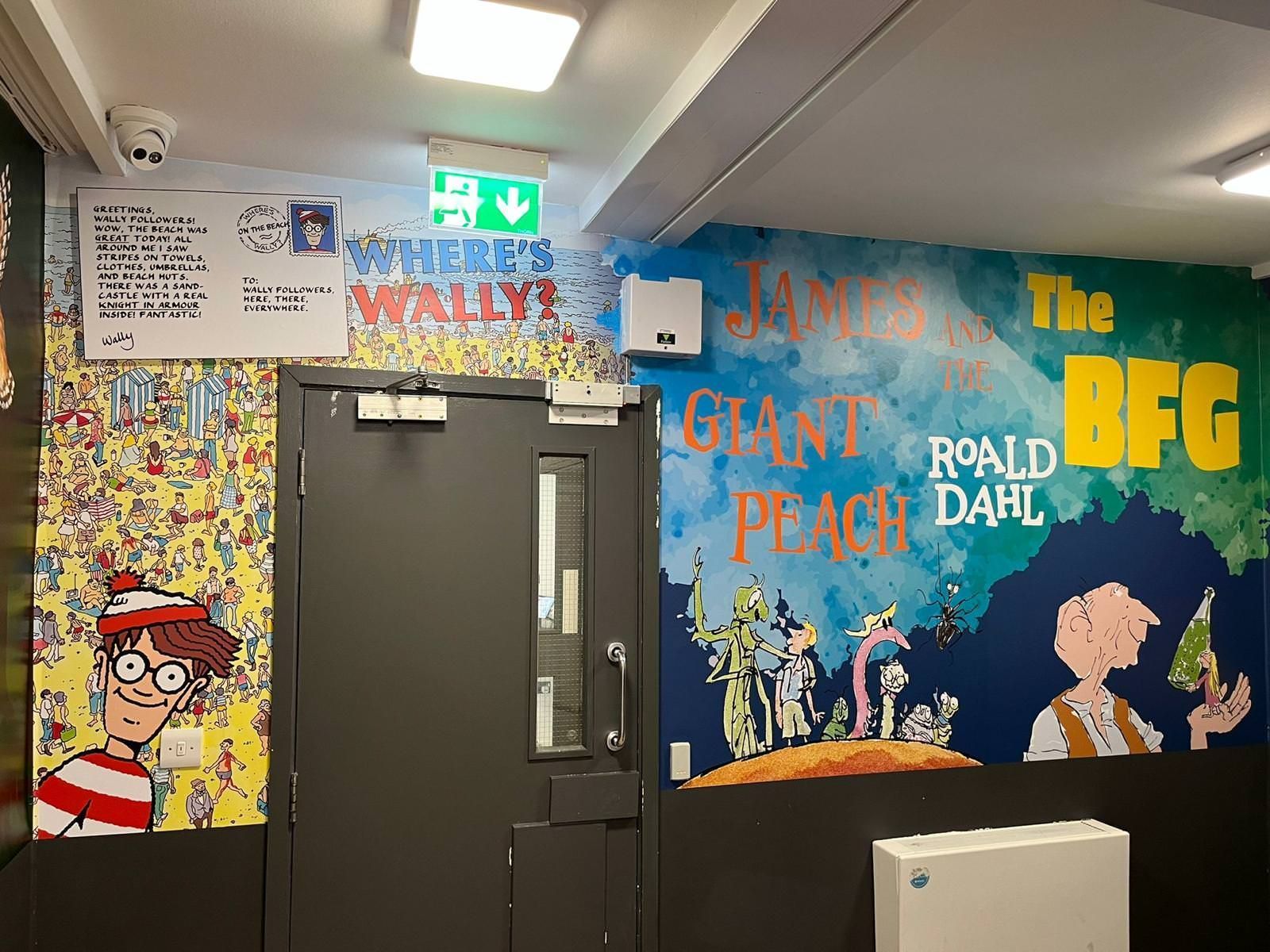
- Incorporate storytelling elements into the graphics to craft narratives that intrigue students and spark discussions.
- Show off student projects by creating spaces on the wall to display their work in a rotating gallery of achievements showcasing their artwork and presentations over time.
The inclusion of motivational aspects:
- It helps to uplift and empower the audience, encouraging them to pursue their goals and dreams with determination and positivity.
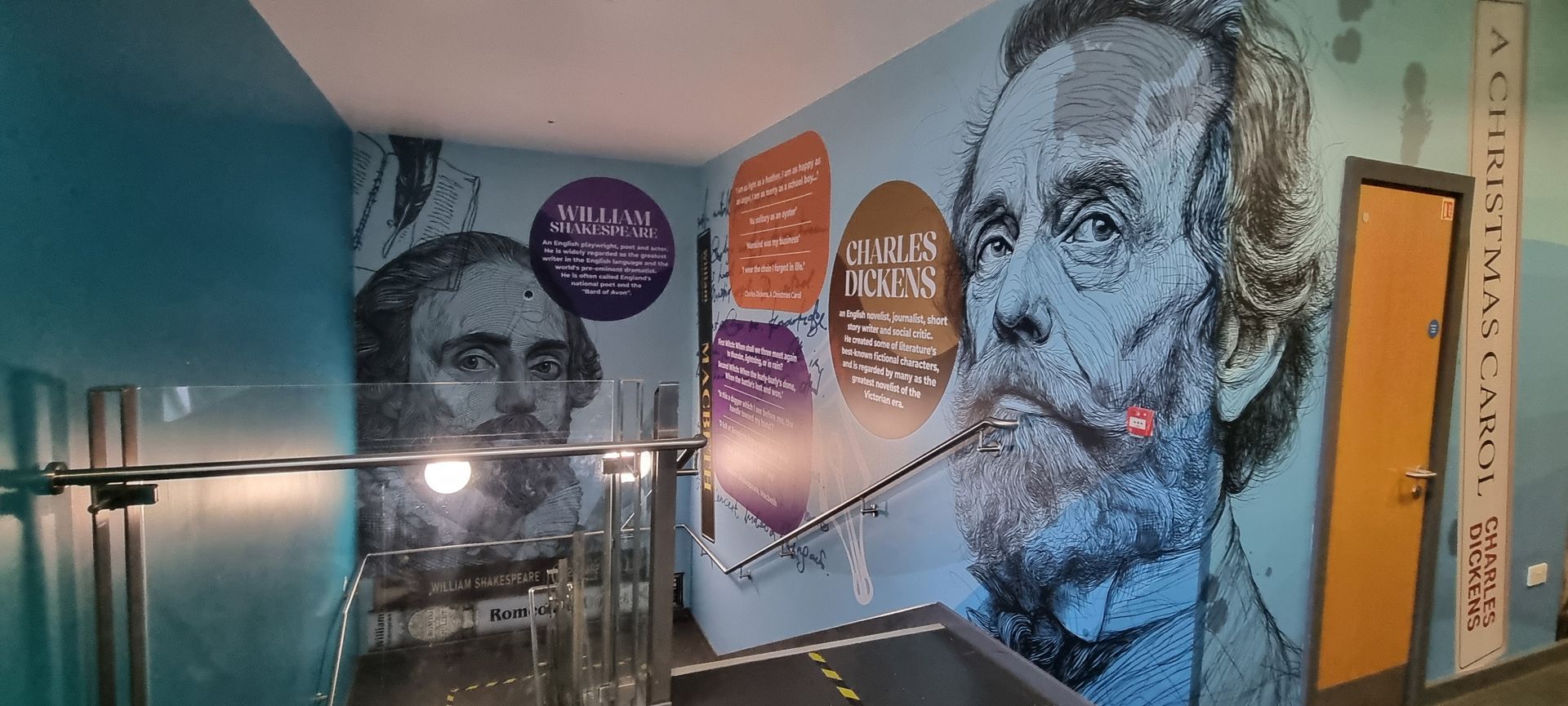
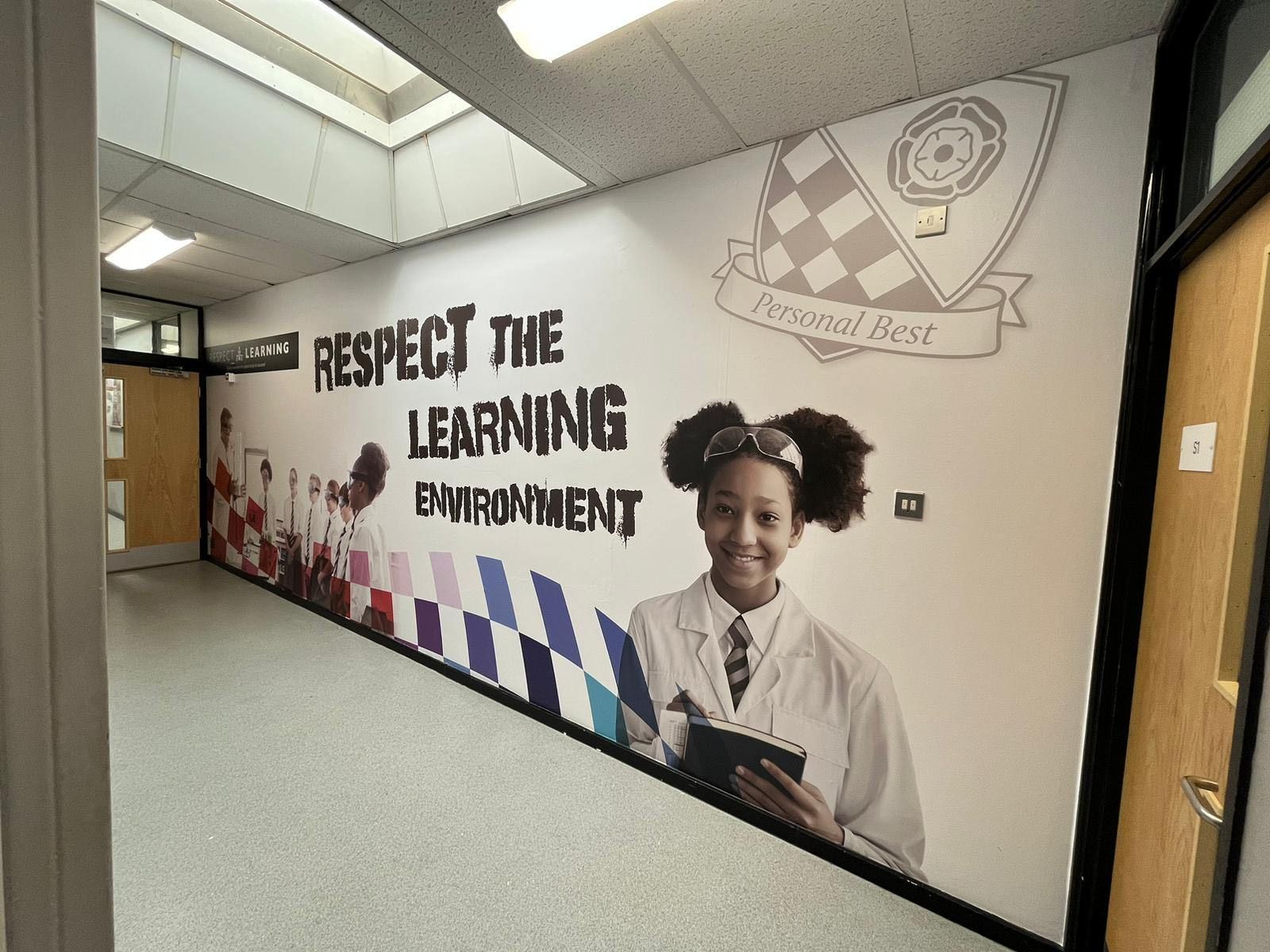
- Include inspiring quotes and messages that promote teamwork, cultivate creativity, and foster a sense of community spirit.
- We are highlighting role models and heroes by showcasing the images and narratives of people who embody the principles of teamwork and community spirit.

Strategically Positioning for Optimal Effectiveness
- Let's design classroom walls that foster collaboration by incorporating surfaces and magnetic boards with engaging graphics for group activities.
- Transformative Corners Initiative. Assign specific corners for hands-on learning activities and collaborative projects to infuse these areas with energy and interactivity.
- Designate specific sections in the hallways to showcase student projects and collaborative works that highlight students' accomplishments.
- Let's incorporate images, discussion cues, and inquiries to motivate students to participate in discussions about the presented topics.
Commonly Shared Areas;
- Let's set up community walls in spaces where students can contribute to ongoing projects and collaborate on large-scale artworks.
- Let's incorporate murals into the mix! Students can contribute their touch by adding drawings and notes—it enhances that feeling of ownership and involvement.
Cosy reading corners;
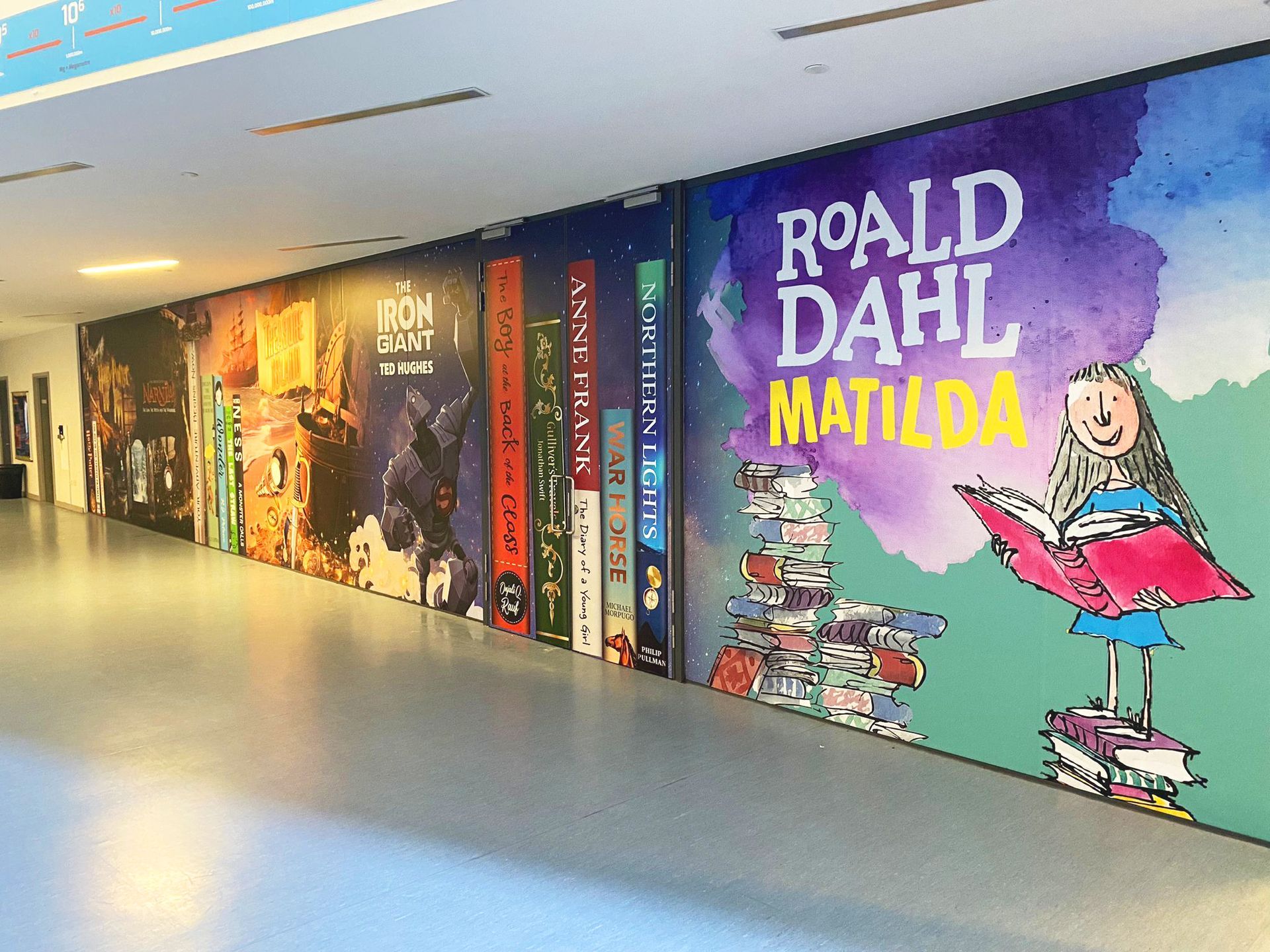
- Let's create spaces within the school dedicated to themes where students can gather to talk about books, work on reading projects, and exchange thoughts and ideas.
- Create platforms for book reviews on boards where students can share their books and suggestions to foster a community of readers.
Strategies for Putting Plans into Action
The process of working on design decisions;
- Incorporate input from students and teachers to ensure the visuals align with objectives and promote teamwork.
- Get assistance from designers to craft top-notch visuals that encourage teamwork and a sense of community.
Material Selection;
- Select sturdy and safe materials for kids to play with that are non-toxic and harmless.
- Choose alternatives by selecting sustainable materials that match the school's dedication to environmental accountability.
Professional Installation Tip:
- Have your installation done by an expert for safety, to maintain a look, and to prevent alignment or damage problems.
- Make sure to place visuals at a height where kids can easily see and reach them.
- Remember to clean and maintain your graphics to stay fresh and engaging over time.
- Plan to update the content to create themes and maintain an engaging and lively environment.
Examples of Wall Graphics that Showcase Collaboration and Community.
The Educational Wall for Interactive Learning;
- Create a wall featuring surfaces that can be written on and wiped off easily alongside boards adorned with engaging graphics to inspire collaborative activities and brainstorming sessions.
- Enhances the learning process by encouraging engaging activities that foster teamwork and cooperation.
Exhibit Hallway Display;
- A hallway showcases various student projects and collaborative endeavours through rotating displays that include areas for artwork exhibitions, presentations and written assignments.
- Promoting student accomplishments boosts morale, strengthens the bond within the community, and creates a sense of unity and pride among all members involved.
Community Mural;
- A giant mural, in a space where students can add their sketches, thoughts and notes to form an artwork that grows and changes over time.
- We are having an impact by motivating students to get involved and promoting a feeling of ownership and camaraderie within the community.
Literature Chatroom;
- The library has a wall adorned with pictures and quotes from known books where students can share their reviews and recommendations and engage in discussions.
- Encourages interaction among readers and fosters group conversations on works.
Closing Ideas:
Schools can establish a setting that nurtures collaboration, engagement and a favourable school atmosphere by using elements that encourage teamwork and a sense of belonging among students and teachers. These graphics boost the school's charm and offer significant educational advantages by promoting involvement and cooperative learning. This strategy aids in cultivating a helpful community, which plays a role in enhancing the general welfare and achievements of students.